Feb 25, 2026
Fine Motor Skills Activities for 4–8 Year Olds in India (Screen-Free & Easy at Home)
Are you searching for the best fine motor skills activities for 4–8 year olds in India that are simple, affordable, and screen-free?
Between ages 4 and 8, children develop essential hand and finger strength required for:
Writing clearly
Holding a pencil correctly
Drawing shapes
Buttoning clothes
Improving concentration in school
With increasing screen time in Indian households, many children are using their fingers for swiping instead of strengthening. That’s why structured fine motor activities at home are more important than ever.
In this guide, we’ll share the best fine motor development activities Indian parents can easily try at home.
What Are Fine Motor Skills?
Fine motor skills involve small muscle movements in the hands, fingers, and wrists. These skills are critical for school readiness and daily independence.
For children aged 4–8 years, strong fine motor skills help with:
Handwriting improvement
Art and craft activities
Self-care tasks
Better academic performance
Many teachers in India report that children struggle with pencil grip and writing stamina due to reduced physical play and increased mobile usage.
That’s why early practice matters.
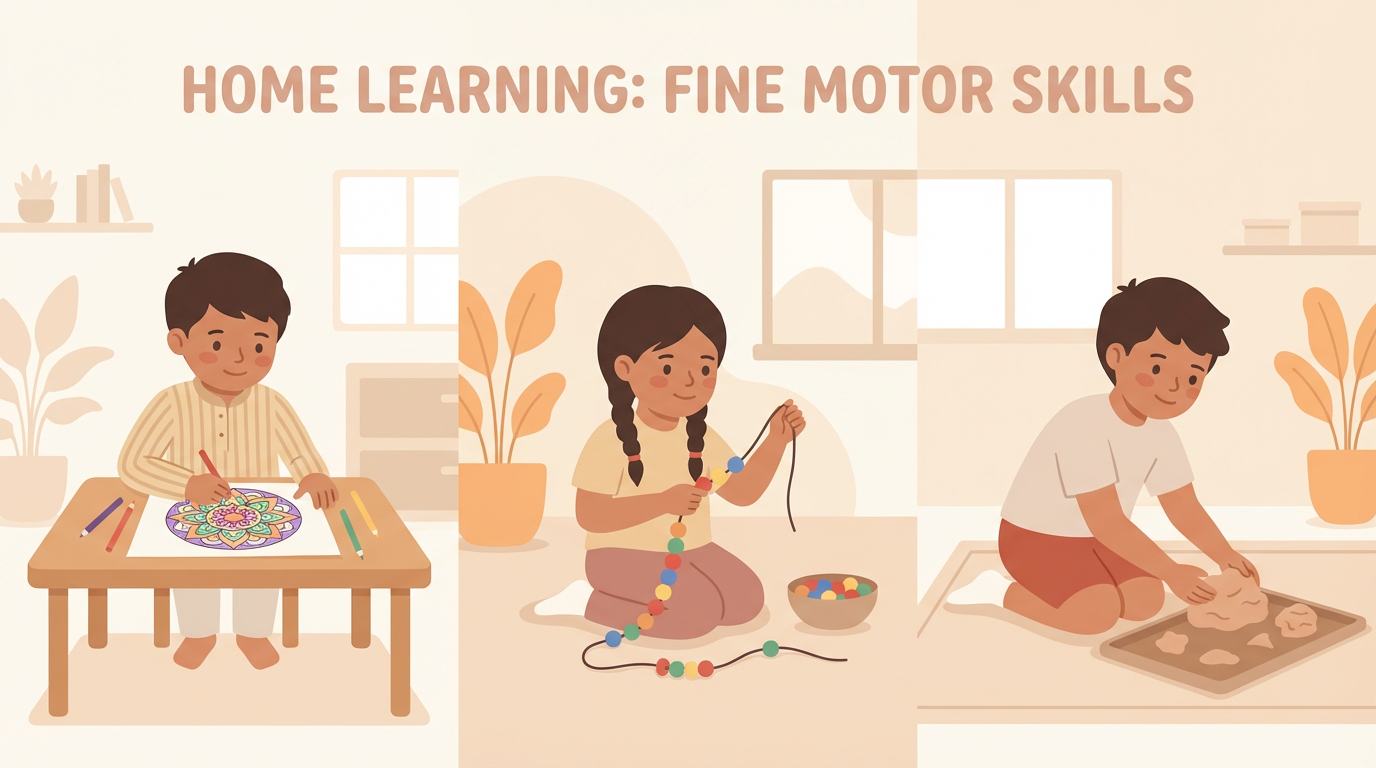
10 Best Fine Motor Skills Activities for 4–8 Year Olds
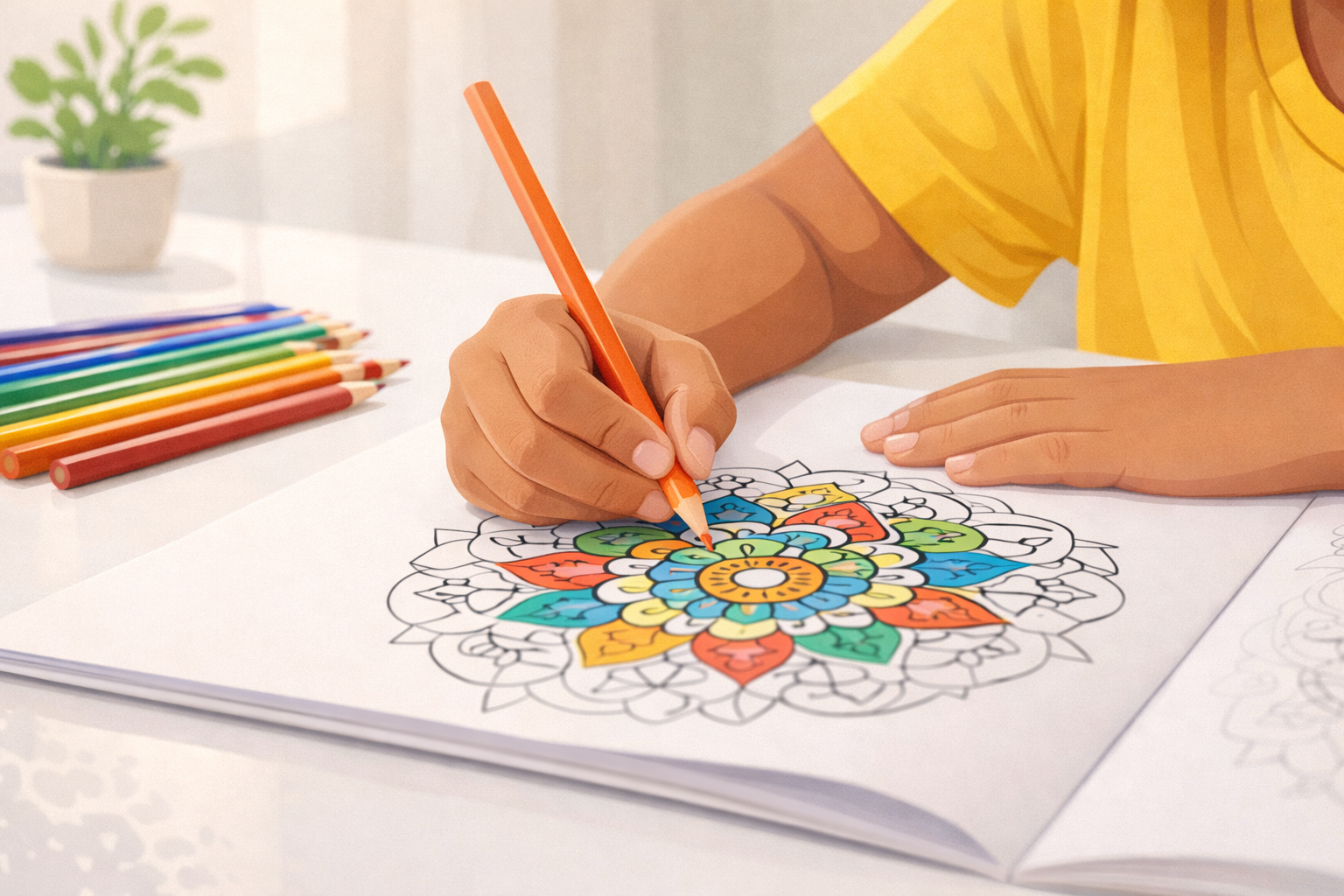
1. Mandala Coloring for Kids
Coloring detailed patterns like mandalas strengthens finger muscles and improves pencil control.
A structured mandala coloring book for kids helps children:
Improve focus
Develop patience
Enhance creativity
Strengthen small hand muscles
Even 20 minutes of daily coloring can significantly improve hand control.
Explore our Mandala Coloring Book for Kids (5–12 Years) here:
https://www.artoria.co.in/
2. Clay or Atta Dough Play
Using clay or homemade wheat dough improves:
Grip strength
Finger flexibility
Hand coordination
Ask children to roll small balls or flatten shapes using fingers.
3. Paper Tearing & Pasting
Give your child old newspapers or colored paper.
Ask them to:
Tear into small pieces
Paste inside shapes
This improves the pincer grip — essential for writing.
4. Threading Beads
Use:
Large beads for 4–5 years
Smaller beads for 6–8 years
Threading improves:
Hand-eye coordination
Precision
Concentration
5. Cutting with Safety Scissors
Supervised cutting practice improves wrist control.
Start with:
Straight lines
Curved lines
Simple shapes
6. Tweezers Activity with Rajma or Chana
Ask children to transfer pulses from one bowl to another using tweezers.
This activity improves:
Finger precision
Control
Coordination
7. Drawing & Shape Tracing
Practice tracing:
Lines
Circles
Alphabets
Numbers
This prepares children for structured handwriting.
8. Building Blocks or LEGO
Stacking and connecting blocks strengthens fingers and encourages creativity.
9. Buttoning & Zipping Practice
Let children practice on:
Old shirts
School uniforms
Zipper pouches
This improves independence and hand control.
10. Simple Paper Folding (Origami)
Paper folding improves:
Bilateral coordination
Accuracy
Patience
Why Screen-Free Activities Are Important for Indian Children
Excess screen time can:
Reduce attention span
Affect handwriting quality
Impact sleep patterns
Replacing just 30 minutes of mobile time with structured activities like coloring can significantly improve concentration and behavior.
Many Indian parents now prefer screen-free activity books for kids to balance digital exposure.
Why Mandala Coloring Is One of the Best Fine Motor Activities
Among all activities, mandala coloring stands out because it:
Strengthens small hand musclesImproves focus durationEncourages calm behaviorEnhances creative thinkingDevelops fine motor precisionFor parents looking for an affordable and structured solution, a mandala coloring book can become a daily skill-building habit.
Even 20–30 minutes per day makes a noticeable difference within weeks.
How Much Practice Is Ideal?
For children aged 4–8 years:
20–30 minutes daily
5 days per week
Keep it pressure-free and fun
Consistency is more important than duration.
Frequently Asked Questions
What are fine motor skills examples?
Examples include coloring, cutting with scissors, threading beads, buttoning clothes, and drawing shapes.
At what age do fine motor skills develop?
Fine motor skills start developing in toddler years but significantly improve between ages 4–8.
How can I improve my child’s pencil grip?
Regular coloring, tracing, and clay play help strengthen finger muscles needed for proper grip.
Looking for a Structured Fine Motor Activity Book?
If you’re searching for an affordable and effective way to improve your child’s focus and hand strength, explore our:
Mandala Coloring Book for Kids (5–12 Years)
Screen-free activityImproves concentrationEnhances fine motor skillsAvailable in Vol 1 & Vol 2Affordable pricing in IndiaVisit: https://www.artoria.co.in/
Final Thoughts
Fine motor skill development during early childhood builds the foundation for writing, creativity, independence, and confidence.
By introducing simple, low-cost, screen-free activities at home, parents can support their child’s development naturally and effectively.
Start small. Stay consistent. Make it fun.
Read More